


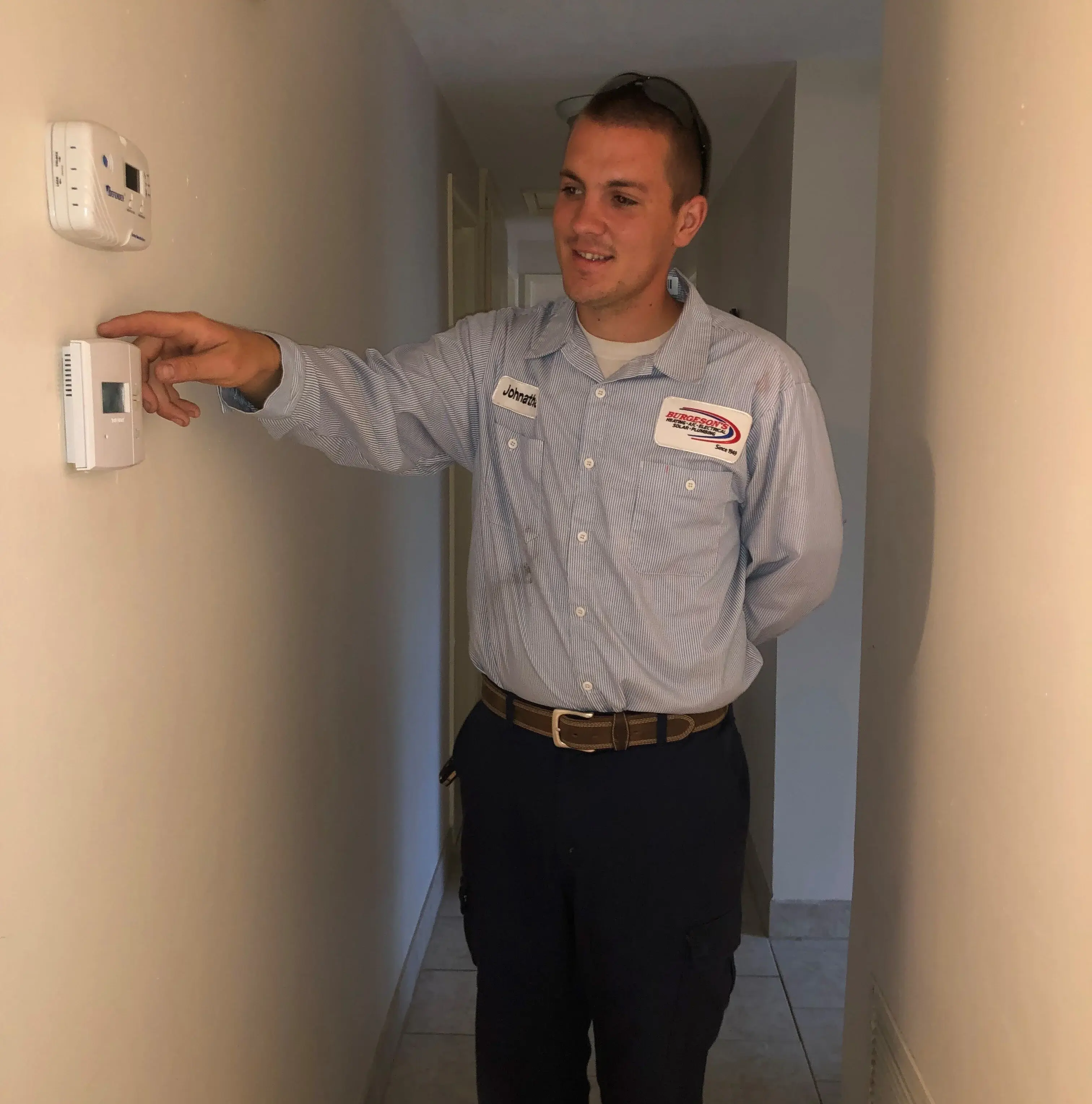
HOW DOES A THERMOSTAT WORK? UNDERSTANDING YOUR HOME’S TEMPERATURE CONTROL
If your home is feeling too warm or too cool, you probably head straight to your thermostat to address the situation. With just the press of a button, you can send warm or cold air circulating throughout your home. As the main control of your home’s temperature, your thermostat allows you to communicate with your heating and cooling system.However, that’s about where most people stop thinking about it.
Although most of us understand what a thermostat does, we don’t really think about how it works. As one of the most important systems within your home, understanding how it controls your home’s temperature is important.
Let’s take a look at how your thermostat actually works — as well as what you can do to save energy and lower your electric bill.
Need help with your thermostat? Contact us today and we'll send a tech over!
Quick navigation:
- What Is a Thermostat?
- The Science Behind a Thermostat
- Types of Thermostats and How They Work
- Common Thermostat Features Explained
- How Thermostats Affect HVAC Efficiency
- Troubleshooting Common Thermostat Issues
- Tips for Choosing the Right Thermostat for Your Home
- Schedule Thermostat Installation or Upgrade with Burgeson’s
What Is a Thermostat?
A thermostat is the central hub for regulating your home's indoor temperature, working tirelessly to maintain comfort while promoting energy efficiency. But how does a thermostat work at its core? It senses air temperature and automatically adjusts your heating or cooling system to keep things steady, preventing extremes that spike your utility bills.
There are several types of thermostats to suit different homes: mechanical for basic control, digital for precision, programmable for automation, and smart for seamless integration. Each type builds on the last, offering ways to fine-tune how a thermostat works for your lifestyle, whether you're in a cozy Redlands cottage or a larger Inland Empire spread.
The Science Behind a Thermostat
To answer the question “How does a thermostat work?”, you need to understand how it reads temperatures and controls your HVAC system.
How thermostats detect temperature
Thermostats use built-in sensors, either mechanical or electronic—to measure the temperature of the surrounding air.
The role of sensors and circuits
Inside, circuits evaluate the temperature reading and compare it to your set temperature. When the two numbers differ, the thermostat sends a signal to your HVAC system.
Communication with heating and cooling systems
Your thermostat tells the system to:
- Turn on the furnace when the home is too cold
- Turn on the AC when the home is too warm
- Shut off once the desired temperature is reached
This cycle repeats throughout the day, allowing your home to maintain consistent comfort.
Types of Thermostats and How They Work
Each thermostat type evolves how a thermostat works for better control and savings. Here's a closer look at the options.
Mechanical (Manual) Thermostats
These classics offer simple, dial-based control for straightforward temperature settings. They operate via a bimetallic strip or mercury switch: As temperature shifts, the strip bends, tipping the switch to activate your HVAC.
Affordable and durable, they're great for smaller spaces but require manual tweaks, which can lead to inconsistent efficiency if forgotten.
Digital Thermostats
With LED or LCD displays, digital thermostats provide more precise temperature control than mechanical ones.
How does a thermostat work in this form? Electronic sensors deliver accurate readings, enabling finer HVAC cycles that reduce energy waste and support broader cost savings through consistent performance.
Programmable Thermostats
Programmable thermostats use pre-set schedules to save energy automatically, adjusting temps when you're away or asleep. Ideal for consistent routines, they automate how a thermostat works to align with your day.
This hands-off approach minimizes runtime, directly lowering electric bills—especially helpful in Southern California's variable weather.
Smart Thermostats
Wi-Fi enabled with mobile app control, smart thermostats learn user behavior and integrate with smart home systems for effortless management. They optimize how a thermostat works by predicting needs, like pre-heating before arrival.
Advanced analytics track usage, highlighting efficiency tweaks for long-term cost reductions.
Common Thermostat Features Explained
Key features enhance how a thermostat works for everyday ease. Temperature calibration ensures accuracy, with self-adjusting options to match your home's quirks. Scheduling and timers automate setbacks, like changing the temp 4°F while at work.
Remote control via app or voice commands lets you adjust on the go, while energy-saving modes and usage reports reveal patterns, empowering you to cut waste and address cost implications like higher summer peaks.
How Thermostats Affect HVAC Efficiency
Your thermostat plays a major role in how efficiently your HVAC system operates.
Proper thermostat use helps lower energy bills
Keeping settings consistent and avoiding extreme adjustments reduces energy consumption.
Avoiding constant cycling
Frequent temperature changes force your system to run harder than needed, increasing wear and energy use.
Programmable and smart thermostats boost efficiency
They automatically regulate indoor temperatures during sleeping hours, work hours, vacations, and more, ensuring comfort without overspending on heating and cooling.
Troubleshooting Common Thermostat Issues
If your thermostat stops working properly, it may affect your entire HVAC system.
Common problems include:
- Unresponsive thermostat or incorrect temperature readings
- Wiring or terminal issues
- Weak or dead batteries
- Miscommunication with the HVAC system
- Need for recalibration or complete replacement
If your home feels uncomfortable despite thermostat adjustments, troubleshooting these issues is a good place to start.
Tips for Choosing the Right Thermostat for Your Home
Selecting a thermostat? Consider HVAC compatibility first—ensure it matches your system's voltage and type. Budget, lifestyle, and smart home integration also factor in: basic mechanical for low-cost simplicity, smart for tech-driven savings.
Choose features based on energy-saving goals, like scheduling for daily commuters. The right pick optimizes how a thermostat works, balancing upfront costs with ongoing efficiency gains.
Schedule Thermostat Installation or Upgrade with Burgeson’s
If tweaking how a thermostat works feels overwhelming, our licensed HVAC experts in Redlands and the Inland Empire are here. Professional installation ensures accurate readings and optimal performance, avoiding DIY pitfalls that could inflate costs.
From upgrades to full setups, we tailor solutions for your home—explore thermostat installation services. Contact the Burgeson’s Heating & Air Conditioning service and repair team by requesting an appointment online or calling 909.792.2222.
How to Set Your Temperature to Save Energy
Here are a few thermostat-related tips to keep in mind to help you save energy year round.
1. Know the Outside Temperature: When your thermostat is trying to control the temperature inside the home, it will be battling against the temperature outside. This means the bigger the difference between the two temperatures, the harder the system is going to need to work — causing you to use more energy.
To help lower your energy use, keep an eye on what the outdoor temperature is expected to be. Set your thermostat as close to that number as possible while still maintaining a comfortable atmosphere within your home.
2. Stay Patient: If you’re blazing hot or freezing cold, you may be tempted to crank the temperature of your thermostat up or down, hoping it will help you get comfortable faster. However, there is only so much energy your system can exert at once. Your home won’t cool down or warm up any faster just because you set the temperature extremely high or very low. Remember to stay patient when trying to get your home to the right temperature. Avoid excessively heating or cooling your home and instead focus on setting your temperature to the right degree the first time around.
3. Use Your Programmable Features: If you have an electronic thermostat, take advantage of the programmable features that probably come with it. Try setting your thermostat to be closer to the outside temperature when you’re away at work for the day. You can use the programmable features within your thermostat to have your temperature change after you leave for work and switch back before you return. Using a Wi-Fi enabled programmable thermostat allows you to have remote access using a smartphone or computer. You are equipped with precise temperature control using intelligent alerts that automatically determine if your home needs to be heated or cooled. Some Wi-Fi thermostats even have filter change indicators to take the guess work out of figuring out when you need to change your hard-working filters!
4. Use Energy-Saving Alternatives: If you’re serious about saving energy, cutting back on the amount you use your cooling and heating system can make a huge difference. While there will be some days you just can’t go without your air conditioning or heat, energy-saving alternatives can help you cut back on the number of days your system is running.
In the winter, heated blankets or a fireplace can add warmth without using significant additional energy. For the warmer summer months, fans help your indoor air circulate. When used along with your heating and cooling system, you can avoid fiddling with your thermostat which could help lower your energy consumption
5. Maintain Proper HVAC Care: If you’re not taking proper care of your HVAC system, you could be wasting a lot of energy. Dirty & plugged air filters, neglecting to schedule service, or not cleaning the area around your compressors can cause your system to work harder. The harder it needs to work, the more energy it will use.
Always be smart about taking care of your HVAC system. Schedule a professional technician to perform a maintenance service on your system. You can schedule your A/C & furnace to be serviced together one time per year, or schedule your heater during the Fall and your A/C during the Spring to ensure they're ready to heat or cool your home. Scheduling yearly maintenance appointments can help you find and repair problems before they become too serious.
Maintaining a well-functioning HVAC system is important for keeping a comfortable home and saving energy.
Get Thermostat help from a Redlands Tech
If you have questions about taking care of your heating and cooling systems or you’re ready to request a maintenance appointment, contact the team at Burgeson's Heating, A/C, Electrical, Solar & Plumbing by requesting an appointment online or by calling 909.792.2222