

How to Improve Attic Ventilation in Southern California: Why It Matters for Your AC Bill
If your second floor feels like an oven in July or your energy bills spike every summer, your attic ventilation might be to blame - not your air conditioner.
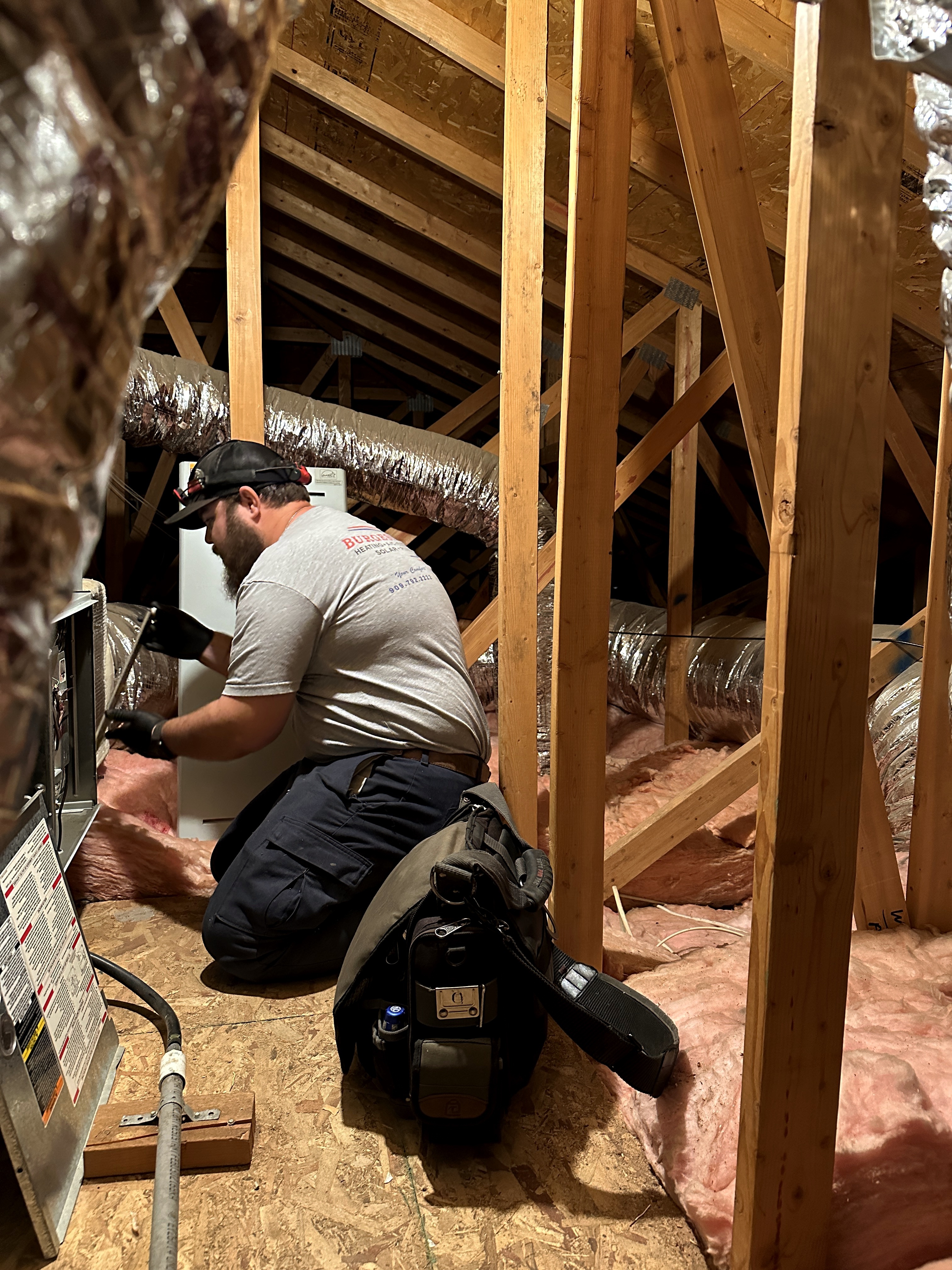
In Southern California's Inland Empire, attic temperatures can easily exceed 140-150F on peak summer days. When that heat has nowhere to go, it radiates down into your living space and forces your air conditioning system to work dramatically harder to compensate. The result: higher utility bills, shorter equipment life, and uncomfortable rooms no matter how low you set the thermostat.
Improving attic ventilation is one of the highest-impact, lowest-cost home improvements available to Inland Empire homeowners. Here's what you need to know.
In Southern California's Inland Empire, attic temperatures can easily exceed 140-150F on peak summer days. When that heat has nowhere to go, it radiates down into your living space and forces your air conditioning system to work dramatically harder to compensate. The result: higher utility bills, shorter equipment life, and uncomfortable rooms no matter how low you set the thermostat.
Improving attic ventilation is one of the highest-impact, lowest-cost home improvements available to Inland Empire homeowners. Here's what you need to know.
Jump to Sections:
Why Attic Ventilation Matters in Southern California
Attic ventilation works by creating a continuous airflow through the attic space - cool air enters through low vents (typically soffit vents in the eaves), rises as it heats up, and exits through high vents (ridge vents or roof vents near the peak). This convective loop does several important things:
- Reduces attic heat buildup, directly lowering the thermal load on your air conditioning system
- Protects roofing materials from premature aging caused by excessive heat
- Prevents moisture damage by allowing humid air to escape (important in the rainy winter months, even in Southern California)
- Improves indoor comfort - especially on upper floors where heat radiates through poorly ventilated ceilings
Signs Your Attic Isn't Ventilating Properly
You don't need to climb into the attic to notice the signs:
- Upper floors consistently warmer than lower floors
- Unusually high summer energy bills
- Hot ceiling to the touch on a warm afternoon
- Ice dams forming in winter (less common in SoCal, but relevant in mountain communities)
- HVAC system running constantly during summer
- Shingles aging or warping prematurely
Types of Attic Ventilation
Passive ventilation relies on natural convection - warm air rises and exits through upper vents while cooler outside air enters through lower vents. This works well when the ratio of high-to-low venting is properly balanced.
Active ventilation uses powered attic fans to mechanically exhaust hot air. This can be effective but should be sized and positioned carefully to avoid pulling conditioned air from your living space through unsealed areas.
Solar-powered attic fans are increasingly popular in Southern California - they run for free during peak daylight hours when attic temperatures are highest, and don't draw from your electrical panel.
Active ventilation uses powered attic fans to mechanically exhaust hot air. This can be effective but should be sized and positioned carefully to avoid pulling conditioned air from your living space through unsealed areas.
Solar-powered attic fans are increasingly popular in Southern California - they run for free during peak daylight hours when attic temperatures are highest, and don't draw from your electrical panel.
Attic Fan vs. Ridge Vent: Which Is Better?
For most Southern California homes, a combination of continuous ridge venting with adequate soffit intake produces the best results. Powered fans are a good supplemental option when passive ventilation alone is insufficient.
How Much Attic Ventilation Do You Need?
The standard building code guideline is 1 square foot of net free ventilation area (NFVA) for every 150 square feet of attic floor space, split evenly between intake (low) and exhaust (high) vents.
For example: a 1,500 sq ft attic floor needs approximately 10 sq ft of total vent area - 5 sq ft of soffit intake and 5 sq ft of ridge or roof exhaust.
Many older Southern California homes were built with inadequate soffit venting. Before adding exhaust vents, a professional should verify that intake capacity is sufficient - adding exhaust without intake can actually worsen performance.
Contact Burgeson's at (909) 792-2222 if you'd like a professional assessment of your attic ventilation and how it's affecting your HVAC system's performance.
For example: a 1,500 sq ft attic floor needs approximately 10 sq ft of total vent area - 5 sq ft of soffit intake and 5 sq ft of ridge or roof exhaust.
Many older Southern California homes were built with inadequate soffit venting. Before adding exhaust vents, a professional should verify that intake capacity is sufficient - adding exhaust without intake can actually worsen performance.
Contact Burgeson's at (909) 792-2222 if you'd like a professional assessment of your attic ventilation and how it's affecting your HVAC system's performance.
Frequently Asked Questions
Can poor attic ventilation damage my roof?
Yes. Excessive heat buildup accelerates the breakdown of asphalt shingles and the underlayment beneath them. Adequate ventilation can meaningfully extend the life of your roofing materials.
Will improving attic ventilation lower my AC bill?
In most cases, yes. A well-ventilated attic significantly reduces the heat gain your air conditioning has to overcome, especially in Southern California's intense summer climate.
Should I seal or ventilate my attic?
This depends on where your insulation is located. If insulation is on the attic floor, you want a ventilated attic. If you have spray foam insulation on the roof deck (unvented attic), different rules apply. A professional inspection can clarify which approach is right for your home.