

How to Prepare Your Southern California Home for El Nino: A Complete Homeowner Guide
NOAA has confirmed a new El Niño has formed as of June 2026, with a 63% chance of becoming one of the strongest on record since 1950. The event is expected to peak November 2026–January 2027, bringing the storm track directly over Southern California with above-average rainfall, flash flooding risk, high winds, and potential power outages for the Inland Empire. The time to prepare your home is now, before storm season arrives.
If you've lived in the Inland Empire for more than a decade, you remember what a strong El Niño winter looks like. Gutters overwhelmed. Hillsides moving. Power out for days. Streets that haven't seen standing water in years suddenly flooded.
Now forecasters are saying this one could be historic. At Burgeson's, we've been helping Inland Empire homeowners prepare their homes for whatever Southern California's weather delivers since 1949. This guide covers every system in your home that El Niño can stress and what to do about each one before the first major storm rolls in.
Our Full El Niño Series (links to)
- Why You Need an HVAC Tune-Up Before El Niño
- Whole-Home Generators: Are They Worth It?
- Protecting Indoor Air Quality During El Niño & Wildfire Season
- Prevent Plumbing Problems Before Heavy Rain
- Electrical Safety Tips for El Niño Storm Season
Jump to Sections
What Is El NiNo and How Does It Affect Southern California?
El Niño is a periodic warming of sea surface temperatures in the central and eastern tropical Pacific Ocean. When temperatures rise 0.5°C above average for several consecutive months, NOAA officially declares an El Niño which is exactly what happened in June 2026.
For Southern California, the effect is a southward shift in the jet stream that steers Pacific storm systems directly into our region. Instead of storms tracking north toward Washington and Oregon, they aim straight at Los Angeles, San Bernardino, and Riverside counties. The results during strong El Niño winters have historically included:
- Significantly above-average rainfall, sometimes 2–3x the seasonal norm
- Atmospheric river events delivering intense rainfall in short windows
- Flash flooding in burn scars, canyons, and low-lying areas
- Wind events and power outages lasting hours or days
- Hillside instability and debris flows in mountain communities
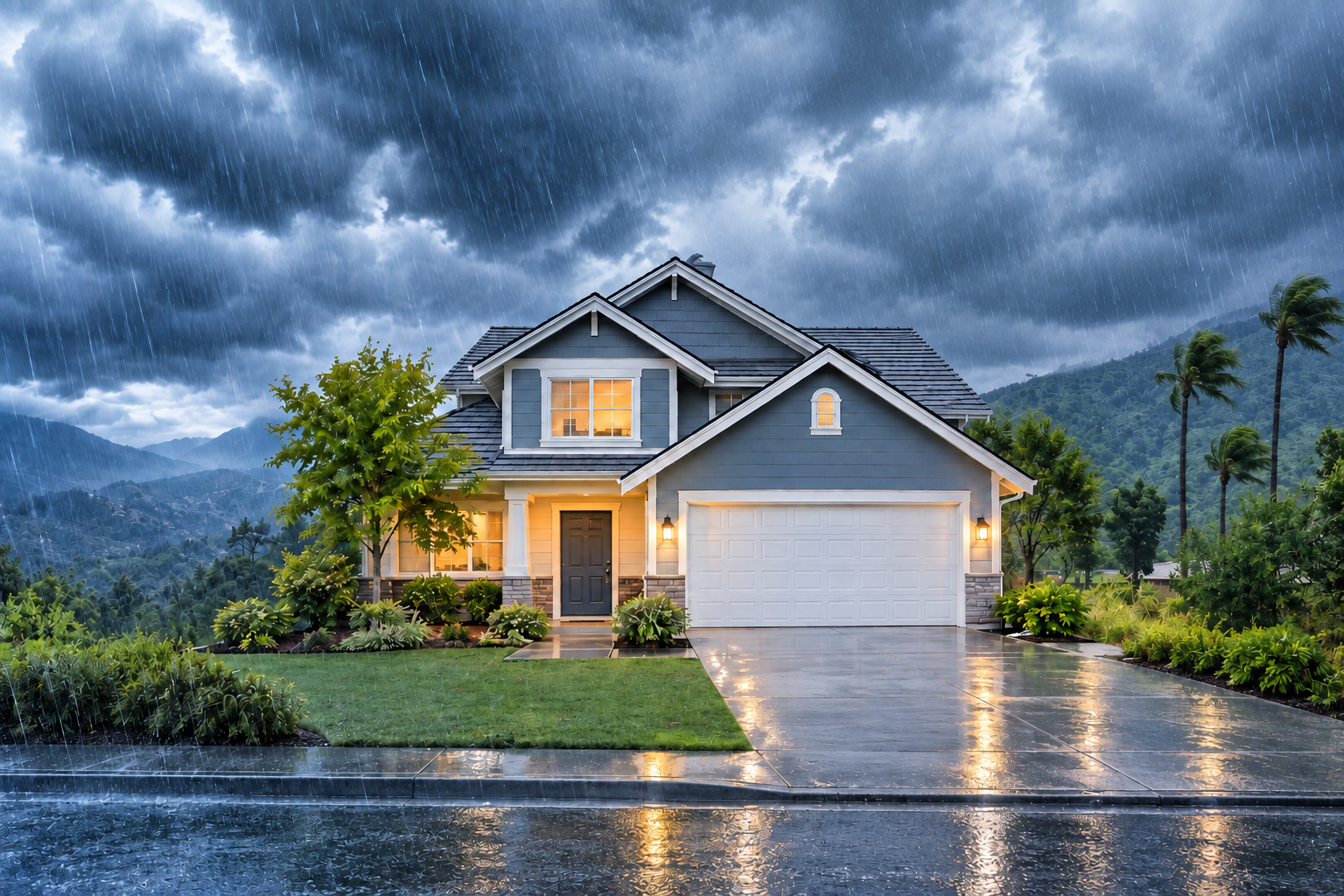
With peak activity anticipated late fall through winter, heavy rainfall and winter storms will impact both coastal valleys and mountain communities.
Your El NiNo Home Prep Checklist
Exterior & Drainage
- Clean gutters and downspouts. Clogged gutters overflow directly against your foundation.
- Inspect roof and flashing. Even a small gap allows significant water intrusion under heavy rain.
- Check that all drainage flows away from the structure. Regrade if needed.
- Clear surface drains and catch basins in patio and driveway areas of leaves and debris.
- Secure or store outdoor furniture, pots, and loose items that become projectiles in heavy wind.
- Trim trees near your home. Dead limbs come down in high winds. Call an arborist if needed.
HVAC System
Your heating system will be working overtime during El Niño winter storms. A clogged condensate drain, a failed blower, or a system running without sufficient maintenance can fail at exactly the wrong moment.
- Schedule a professional HVAC tune-up before storm season.
- Replace air filters. Wet winter weather increases microbial growth and particulate circulation indoors.
- Clear debris from around your outdoor condenser unit and check the pad is level.
- Verify the condensate drain line is clear. Heavy humidity loads clog it fast.
Plumbing
- Have a plumber inspect crawl spaces and exposed pipes before cold El Niño storms.
- Check sump pump operation if you have one. Replace the battery backup if it's been years.
- Locate your main water shutoff and make sure every adult in the home knows where it is.
- Clear area drains and clean-outs of debris before storm season.
- Inspect supply line connections under sinks and at toilets. Storm pressure fluctuations can reveal weaknesses.
Electrical
- Test all GFCI outlets especially in your garage, bathrooms, and exterior locations.
- Have your electrical panel inspected if it's aging or hasn't been serviced in years.
- Install whole-home surge protection before storm season. Lightning and grid fluctuations can destroy electronics and appliances.
- If you rely on powered medical equipment, plan now for power outage scenarios.
Generator & Backup Power
- If you don't have a generator, assess whether a standby whole-home unit makes sense.
- Test your existing generator now! Don't wait for the storm.
- Stock fuel safely for portable generators. Never run a portable generator indoors or in a garage.
Emergency Kit
- Water: 1 gallon of water per person per day, 3-day minimum
- 3-day food supply, flashlights, batteries, portable phone charger
- Paper copies of insurance documents, IDs, and emergency contacts in a waterproof bag
- 7-day supply of prescription medications
- Know your flood zone status and check FEMA's Flood Map Service Center
Start With Your Home's Systems
A motivated homeowner can tackle everything on the exterior list over a weekend. The systems inside your home - HVAC, plumbing, and electrical - are where most Inland Empire families get caught off guard. These are the components that require professional attention before the season starts, and they're the ones most likely to fail during a sustained storm event.
Burgeson's offers inspections and maintenance covering your HVAC, plumbing, and electrical systems throughout the Inland Empire to help you prepare for El Niño season. Call (909) 792-2222 to schedule your pre-storm maintenance inspection or request an appointment online at burgesons.com
Frequently Asked Questions
When is El Niño expected to hit Southern California?
NOAA officially confirmed a new El Niño formed in June 2026. Forecasters predict the event will strengthen through fall and peak between November 2026 and January 2027, which corresponds to Southern California's primary winter storm season. Preparation should be complete well before November.
How bad could El Niño be for the Inland Empire?
Strong El Niño events have historically brought 2–3x the normal seasonal rainfall to Southern California's interior valleys, along with high winds, flooding, and extended power outages. The current system has a 63% chance of being among the strongest since 1950, making it comparable to the powerful 1997–98 season.
Should I consider flood insurance before El Niño?
If you're in a moderate or high-risk flood zone, yes and act quickly. The National Flood Insurance Program (NFIP) has a mandatory 30-day waiting period before coverage begins. Consider looking into it even if you're outside of high risk flood zones. Over 20% of flood insurance claims come from properties not in designated flood areas.
What should I prioritize when preparing my home for El Niño?
If we had to pick one starting point, it would be a professional maintenance inspection of your home's three major mechanical systems: HVAC, plumbing, and electrical. These are the systems that fail during extended storm events and whose failures are the most expensive and disruptive. Address exterior drainage and gutters next.
Ready to Prepare Your Home?
Ready to protect your home before El Niño arrives? Call Burgeson's at (909) 792-2222 or request an appointment online at burgesons.com.
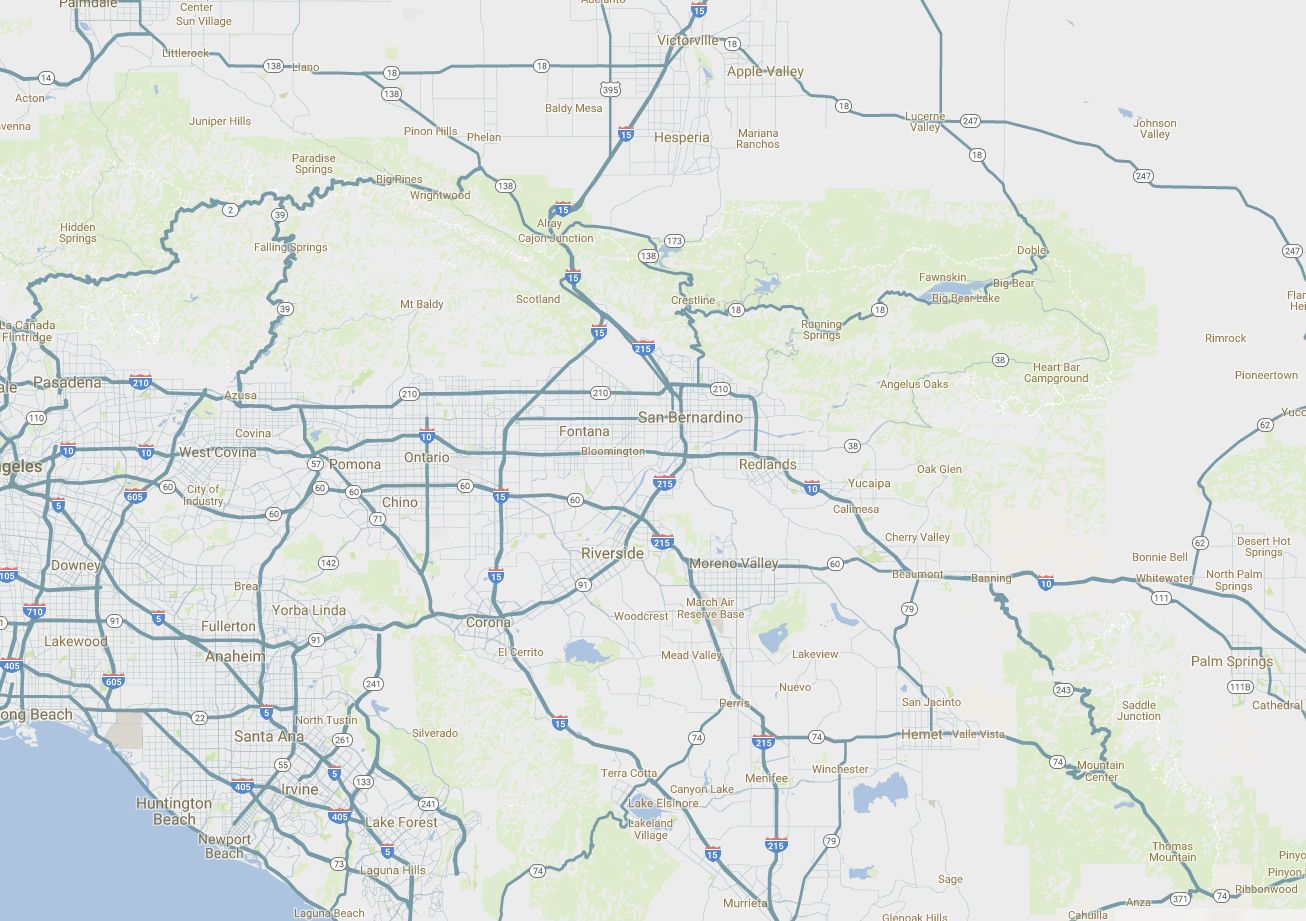
Serving Redlands, Riverside, San Bernardino, and the Inland Empire since 1949.