

Whole-Home Generators: Are They Worth It During El NiNo?
For Inland Empire homeowners with medical equipment, home businesses, aging family members, or simply the expectation of staying home during a multi-day outage, a whole-home standby generator is absolutely worth the investment. For households that can comfortably ride out shorter outages or plan to evacuate, a quality portable generator may be sufficient. The determining factor is how long you can realistically function without power, and an El Nino winter will test that answer.
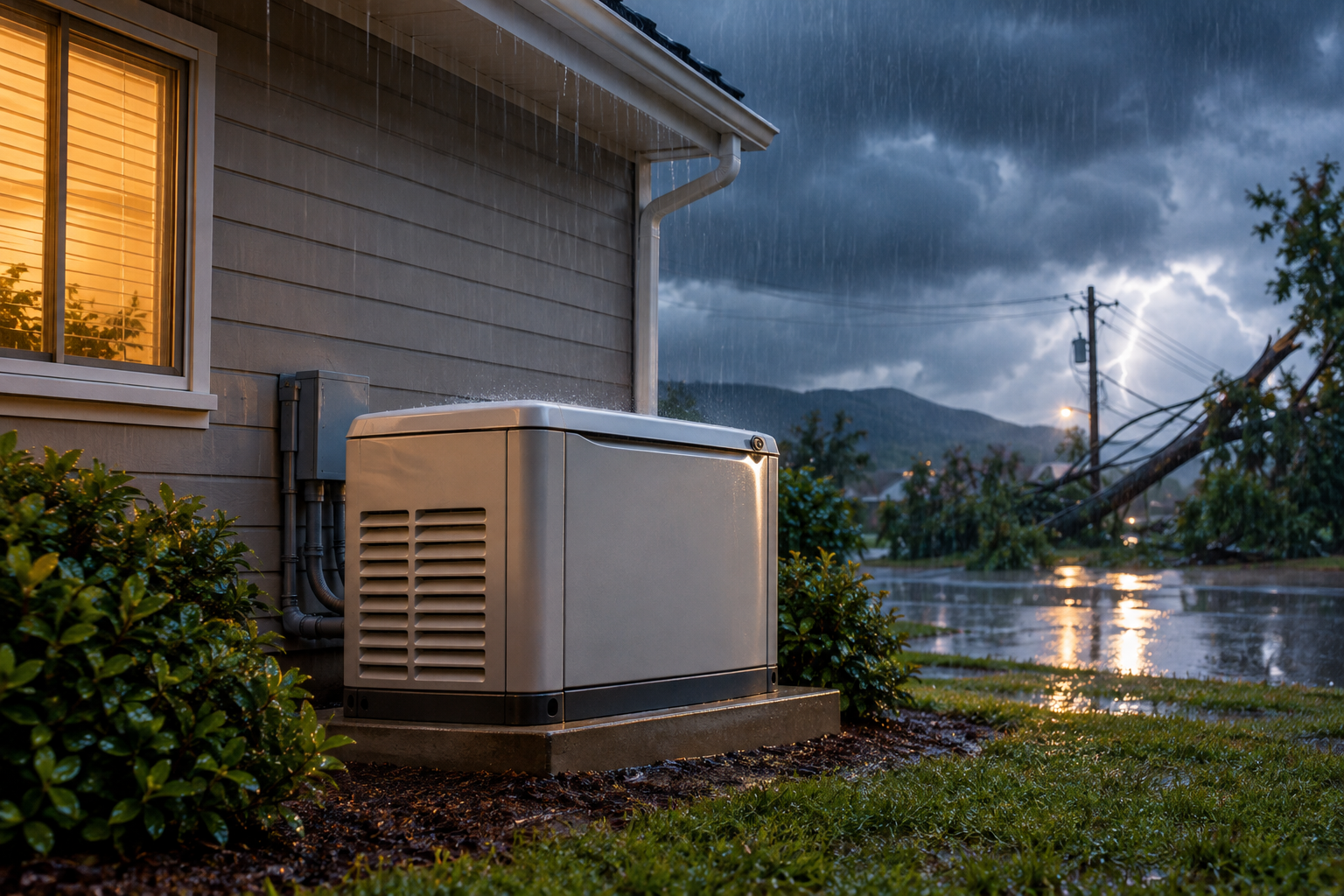
El Niño brings a lot of things to Southern California like heavy rain, flooding, mudslides, atmospheric rivers. What it also brings, consistently, is power outages. When saturated ground causes trees to topple onto power lines, when lightning strikes substations, when high winds combine with wet conditions to trip circuit breakers across the grid, Southern California Edison and other utilities restore power on a priority basis. Critical infrastructure first. Major commercial areas second. Your street when they get to it.
During strong El Niño events, that wait has historically stretched into multiple days for some Inland Empire neighborhoods. The question isn't just whether a generator is worth the cost, it's what you lose if the power goes out for 48 or 72 hours.
Jump to Sections
Standby Generator vs. Portable Generator: Which Is Right for You?
| Feature | Whole-Home Standby Generator | Portable Generator |
|---|---|---|
| Startup | Automatic: Powers on within seconds of outage, no action required | Manual: Requires setup, fuel, and startup during the outage |
| Power capacity | 16+ kW: Can power an entire home including HVAC | 1–10 kW: Enough for appliances, not central AC or heating |
| Fuel source | Natural gas or propane: Connected to existing supply | Gasoline or propane: Requires storing and rotating fuel |
| Installation | Professional installation required; permits required in California | Plug-and-play for most models |
| Installed cost | $15,000–$30,000+ depending on size and natural gas access | $500–$3,000 for the unit transfer switch or interlock kit if hardwired |
| Maintenance | Annual service; runs self-test weekly automatically | Requires regular manual testing and fuel management |
| Carbon monoxide risk | None: Installed outdoors with permanent venting | High if used improperly indoors or near openings |
| Best for | Medical equipment, home businesses, multi-day outages, full comfort | Shorter outages, essential appliances, supplemental backup |
What Size Whole-Home Generator Do You Need?
Generator sizing depends on what you need to power and whether you want to run everything simultaneously or prioritize circuits. Here's a practical breakdown for Southern California homes:
| Home Size / Priority | Recommended Generator Size | What It Covers |
|---|---|---|
| Essential circuits only (lights, refrigerator, some outlets) | 7–10 kW | Critical appliances not central HVAC |
| 1,500–2,500 sq ft home, partial load | 13–16 kW | Most appliances + smaller HVAC units |
| 2,500+ sq ft home, full-home backup | 20–22 kW | Whole home including central AC/heat |
| Homes with EV charger, pool, or large HVAC | 22–26 kW | Full load including high-draw circuits |
The Real Cost of a Whole-Home Generator in Southern California
The total installed cost of a standby generator in the Inland Empire typically ranges from $15,000 to $30,000 depending on generator size, natural gas line work required, and any electrical panel upgrades needed. Here's what drives that cost:
- Generator Capacity and Brand: The physical size and kilowatt (kW) output—ranging from a partial-load 14 kW unit to a full-home 24+ kW system—directly dictate the equipment price.
- Natural Gas Line Work: Running or extending gas lines from your main meter to the generator's exterior location involves professional plumbing, materials, and labor.
- Electrical Panel Upgrades & Transfer Switch: Installing an automatic transfer switch and upgrading outdated electrical panels to safely integrate heavy backup loads require specialized electrical labor.
- Permits and Inspections: Local California building permits, electrical permits, and mandatory municipal inspections add to the total project cost.
When you compare this to the cost of a single extended power outage, spoiled food, hotel stays, lost work, potential pipe damage, and medication refrigeration, many Inland Empire families find the math compelling, especially with a historic El Niño on the way.
Financing Available
Burgeson's offers flexible financing options for generator installation. Ask about current programs when you call. Making whole-home backup power accessible to more Inland Empire families is something we're committed to. Call (909) 792-2222.
Important Safety Notes for Portable Generator Users
If a whole-home standby generator isn't in your immediate plans but you plan to use a portable unit during El Niño outages, please review these non-negotiable safety rules:
- Never run a portable generator indoors, in a garage, or near any opening including windows, doors, and vents. Carbon monoxide kills silently.
- Keep the generator at least 20 feet from your home and any neighbor's structure.
- Never connect a portable generator to your home's wiring without a transfer switch installed by a licensed electrician. This is a legal requirement in California and protects utility workers from backfed electricity
- Store fuel safely in approved containers, away from living areas, and rotate it regularly. Old gasoline degrades and can cause generator failure when you need it most.
- Install battery-operated carbon monoxide detectors on every level of your home before storm season if you plan to use a portable generator.
Frequently Asked Questions
How long do whole-home generators last?
A properly maintained standby generator typically can last 15–20 years. Annual service, which Burgeson's provides, is the key to maximizing that lifespan. Most manufacturers recommend an annual tune-up and load test.
Do I need a permit to install a generator in California?
Yes. Standby generators require a building permit in virtually all California jurisdictions, and must be installed by a licensed electrical contractor. The permit process includes an inspection to verify safe installation and proper clearances. Burgeson’s will handle all permit applications as part of the installation process.
What happens if the power goes out? Does a standby generator turn on automatically?
Yes. A standby generator is connected to your home through an automatic transfer switch that detects a power outage within seconds and automatically starts the generator and switches your home to generator power all without any action required from you.
Can a generator run my air conditioner?
It depends on the generator size and your HVAC system. A whole-home standby generator (16 kW or larger) can typically run a central HVAC system, though sizing should be verified by a professional. Most portable generators do not have sufficient capacity to power central air conditioning or heating.
Ready to Install Backup Power Before El NiNo?
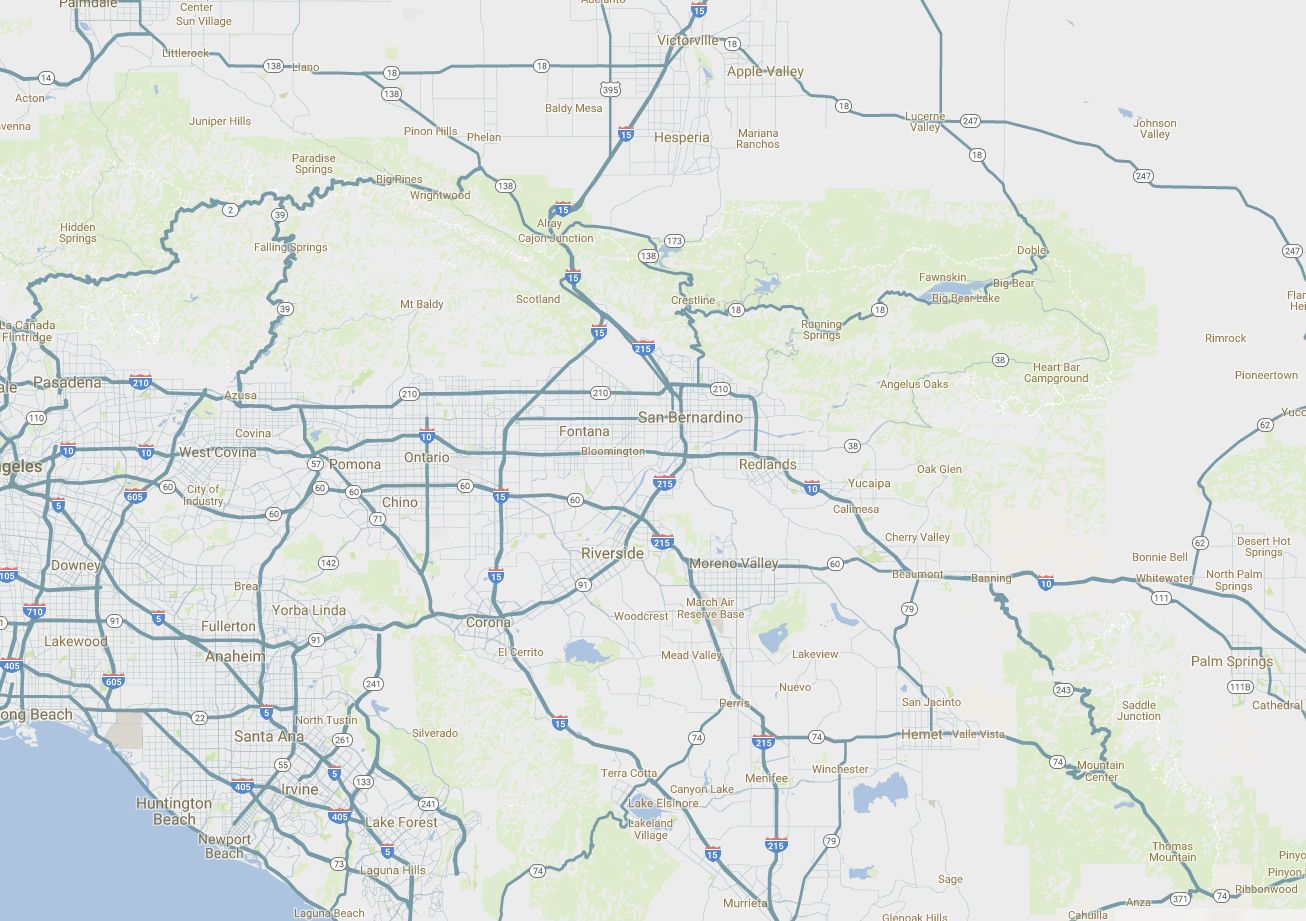
Ready to protect your home before El Niño arrives? Call Burgeson's at (909) 792-2222 or request an appointment online at burgesons.com. Serving Redlands, Riverside, San Bernardino, and the Inland Empire since 1949.