

Why Every Homeowner Should Schedule an HVAC Tune-Up Before El NiNo
El Niño storms stress your HVAC system in ways that regular use doesn't. Heavy humidity loads can clog condensate drains. Power fluctuations from grid instability may damage control boards. Flooding near the outdoor unit can compromise electrical components. A professional pre-season tune-up can help mitigate all of that before a storm hits.
Most homeowners think of their HVAC system as just a summer/winter thing: AC in July, heating in December. But the truth is that wet El Niño weather can hit your system hard in ways that a dry Southern California year never would.
Burgeson's technicians have fielded calls during and after every major storm season for 77 years. The pattern is consistent: the calls that come in during a storm almost always involve systems that hadn't been serviced in a while. The families who called us before the season? They typically stay comfortable.
Here's what happens to your HVAC system during an El Niño winter and why a tune-up before storm season is one of the smartest investments you can make.
Jump to Sections
How El NiNo Weather Specifically Stresses Your HVAC System
1. Condensate Drain Overload
Your HVAC system removes moisture from indoor air as part of the cooling process. That condensate flows through a small drain line to the outside. During normal Southern California conditions, this system works fine.
During sustained El Niño humidity with multiple storm systems moving through over weeks, the volume of condensate increases dramatically. The drain line has to handle quantities it typically does not see under normal conditions. Algae, organic growth, dirt, and debris build up faster.
A blocked condensate line backs up into the drain pan, overflows into the air handler, and can cause water damage to ceilings and/or the walls beneath the unit.
A pre-season tune-up clears the condensate drain line before this happens.
2. Voltage Spikes and Grid Instability
El Niño storms bring lightning strikes and significant stress to the power grid. Every time power flickers, surges, or drops during a storm, sensitive HVAC control boards take a hit.
Modern HVAC systems are computer-controlled; the circuit boards that manage your system are just as vulnerable to electrical spikes as any other electronics in your home.
A tune-up checks your system's electrical connections for corrosion or loose contacts that heighten this vulnerability. Burgeson's can recommend a dedicated surge protector for your HVAC disconnect if one isn't already in place.
3. Outdoor Unit Exposure
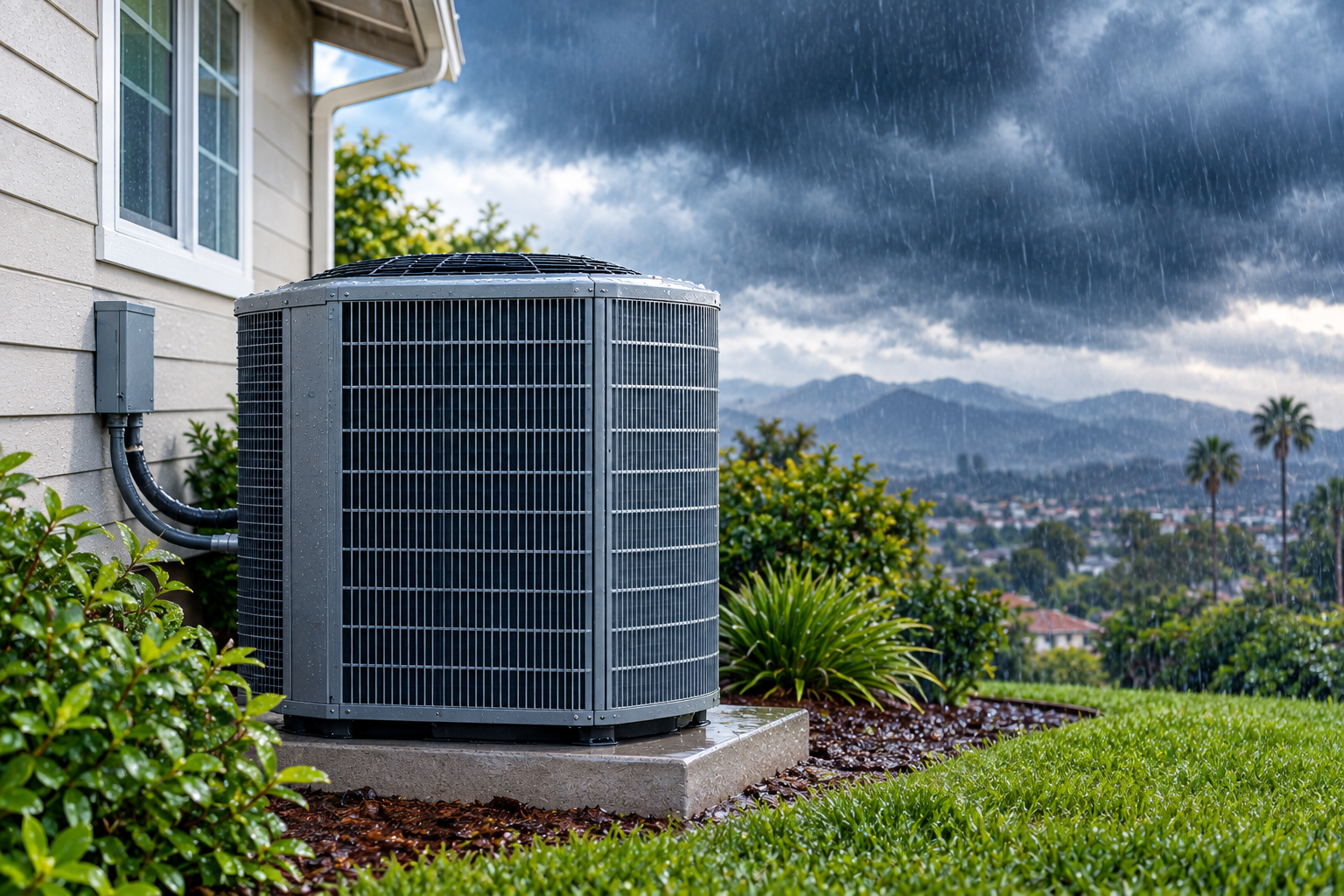
Your outdoor condenser or heat pump unit sits on a pad outside your home, exposed to everything. Heavy rain saturates the ground around it, and settling or erosion can shift the pad and alter the unit's leveling.
Wind-driven debris can accumulate in and around the condenser coils. A post-storm, pre-season inspection can catch any positioning or debris issues before they compound.
4. Filter and Airflow Demands
Winter El Niño storms can bring in particulates such as:
- Mold spores from saturated soil and vegetation
- Wildfire smoke on dry days between storms
- Increased dust as winds precede rain
A dirty or clogged filter in the middle of storm season forces your system to work harder to maintain airflow, which reduces efficiency, shortens blower life, and delivers degraded air quality throughout your home.
Some of What a Burgeson's Pre-Season HVAC Tune-Up Includes
| Maintenance Checklist | Why It Matters During El Niño |
|---|---|
| Thermostat calibration check | Ensures accurate heating during cold storm periods |
| Condensate drain clearing | Prevents overflow and water damage during high-humidity events |
| Electrical connections and control board check | Reduces vulnerability to power fluctuations |
| Blower assembly inspection | Maintains airflow through heavy-use winter period |
| Refrigerant level check (heat pumps only) | Heat pumps must have correct levels to heat efficiently |
| Condenser coil cleaning | Maintains heat transfer efficiency for heat pumps in cold, wet conditions |
| Outdoor unit inspection and leveling check | Catches settling or wind damage before it worsens |
| Filter check | Critical for air quality during storm-driven particulate events |
| Ductwork visual inspection | Identifies leaks that worsen during storm pressure differentials |
When to Schedule Your Pre-Season Tune-Up
NOAA's forecast points to El Niño peaking between November 2026 and January 2027. That means the window to act is now before the schedule fills up.
Burgeson's HVAC service calendar books quickly as homeowners are preparing for storm season, and a tune-up could require a follow-up window of a day or a week if any parts need ordering.
Don't wait for the first storm advisory to call. Schedule your pre-season HVAC tune-up with Burgeson's today at (909) 792-2222 or request an appointment at burgesons.com.
Frequently Asked Questions
How often should I get my HVAC system serviced?
Our full maintenance done all at once ensures your system is prepared for all seasons. Twice a year, once before cooling season (spring) and once before heating season (fall), is also a common option.
El Niño years are not the time to skip a service. A system that hasn't been tuned up in more than a year is considerably more likely to fail during peak storm demand.
Will a tune-up actually prevent my HVAC from breaking down?
It significantly reduces the likelihood. Industry data consistently shows that regularly maintained HVAC systems have fewer emergency breakdowns than neglected ones.
More importantly, a tune-up catches the specific vulnerabilities, including drainage, electrical connections, and proper refrigerant levels, that El Niño conditions specifically exploit.
How do I know if my condensate drain is clogged?
Signs include water dripping from the air handler or in the space around it, a musty smell from the vents, or your system shutting off unexpectedly.
Many modern units have a float switch that kills the system if the drain pan fills. If your system does not include a water overflow sensor, we recommend having one installed.
If you see any of these signs, turn off the system and call Burgeson's.
Should I do anything to my outdoor unit during an El Niño storm?
If wind-driven debris is forecasted, you can clear the immediate area around the unit before the storm.
During the storm, don't attempt to cover the unit with a tarp. This can trap moisture and create conditions for mold and corrosion.
After the storm, check for debris in the coil fins and ensure the pad hasn't shifted significantly.
Schedule Your Pre-Season Tune-Up
Ready to protect your home before El Niño arrives? Call Burgeson's at (909) 792-2222 or request an appointment online at burgesons.com.
Serving Redlands, Riverside, San Bernardino, and the Inland Empire since 1949.